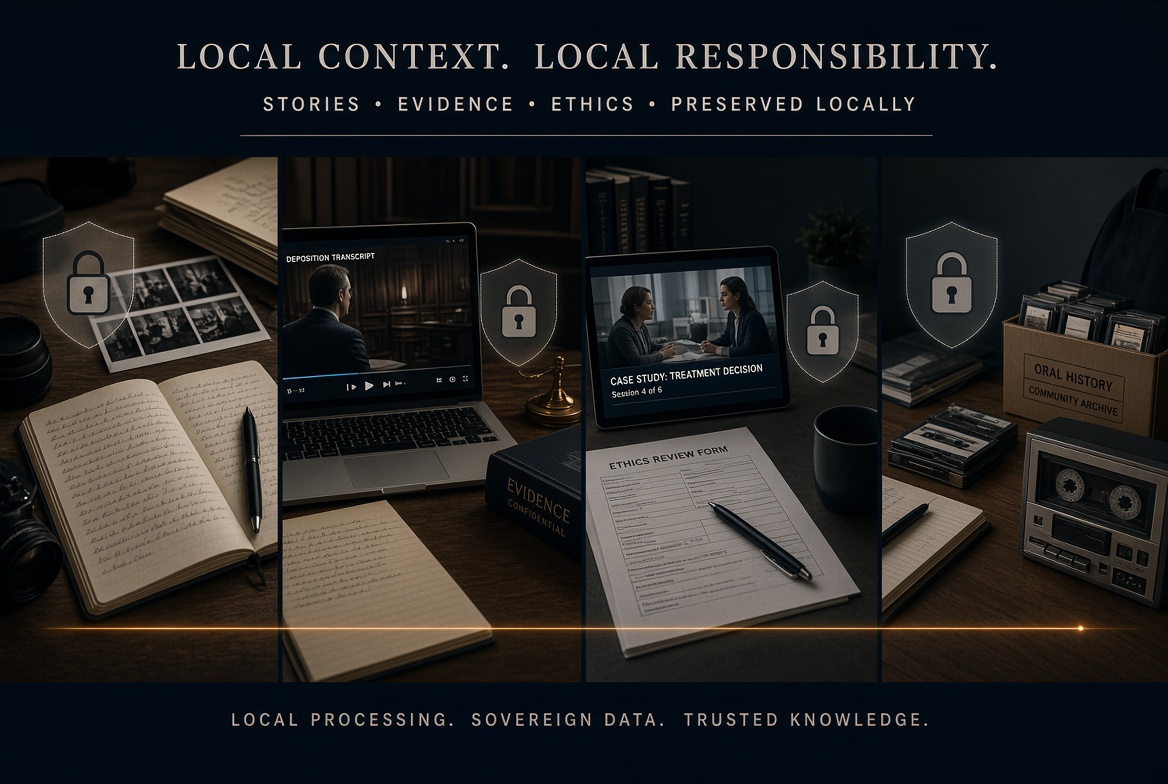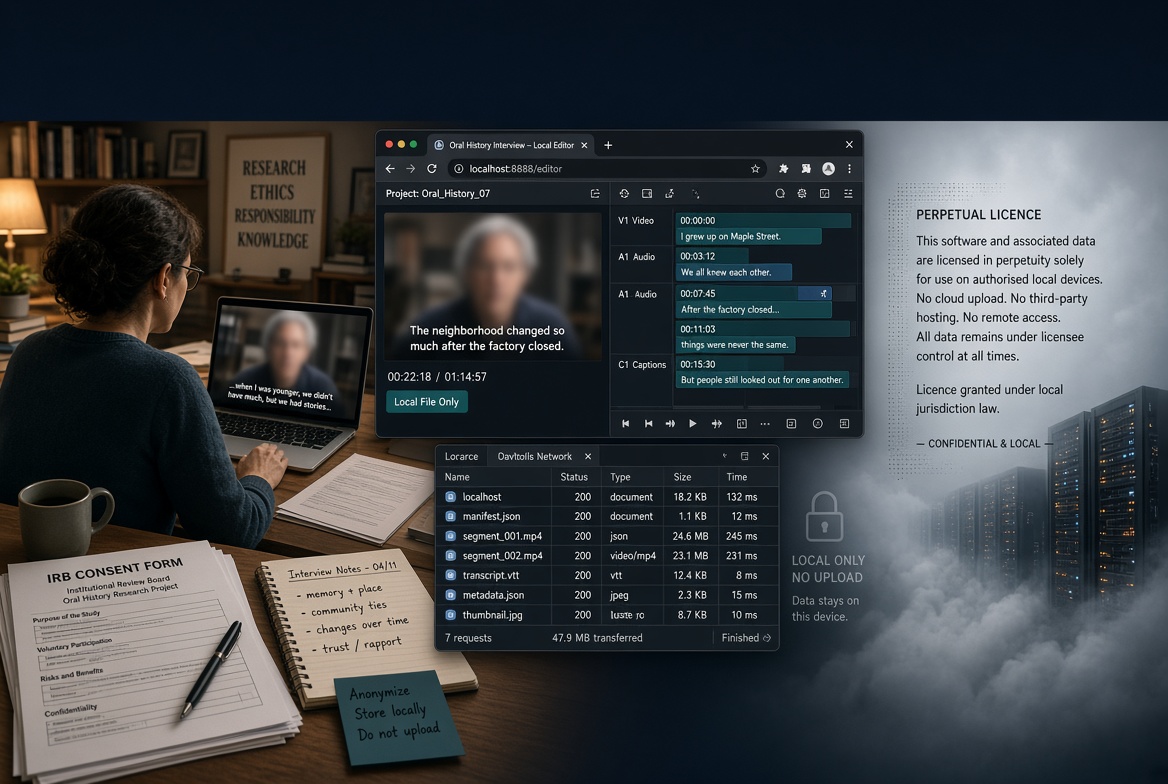
Universities are producing video scholarship at scale. Patient interviews for medical education. Oral histories. Fieldwork documentation. Qualitative research footage that carries IRB approval, informed consent forms, and strict handling protocols. Then editors open CapCut or Descript, click upload, and send it all to a server farm they cannot audit.
The conflict is structural. Modern video tools depend on cloud processing. Modern research ethics depend on data minimisation and lawful basis. When a medical educator uploads patient footage to generate auto-captions, the terms of service often grant the platform a perpetual licence. When a doctoral candidate sends interview transcripts to Descript, those transcripts are stored indefinitely on infrastructure the researcher does not control and cannot verify.
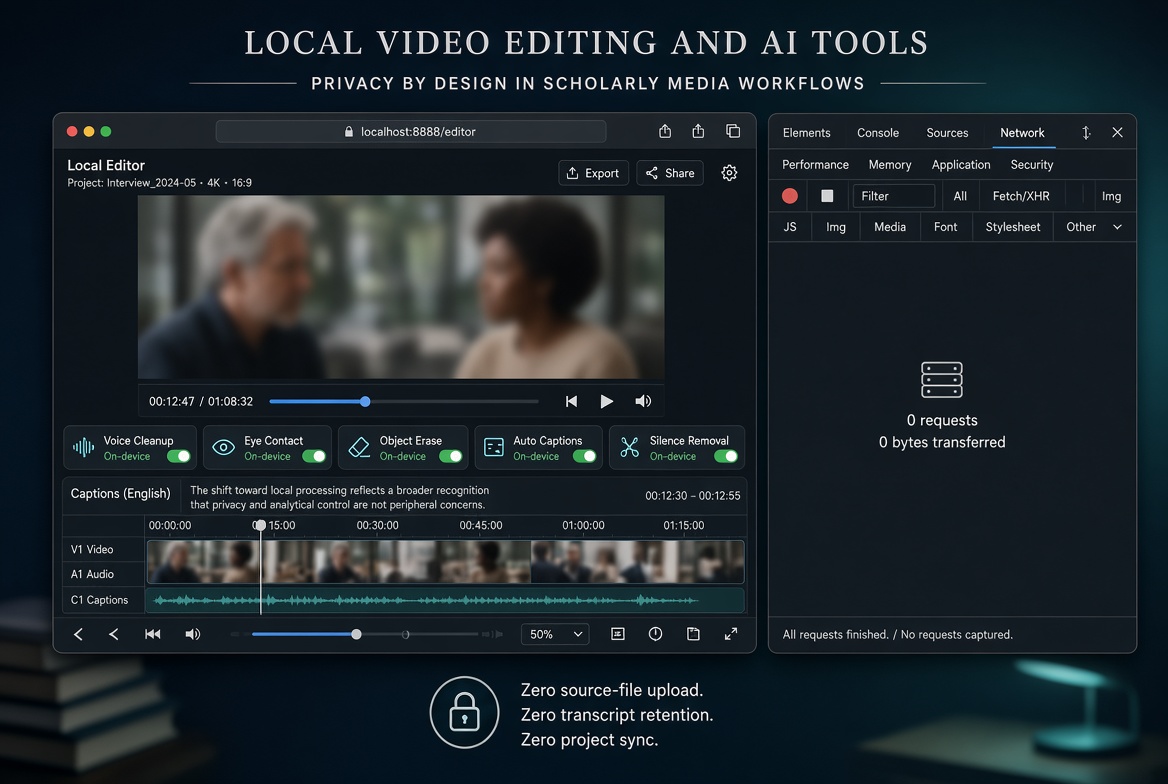
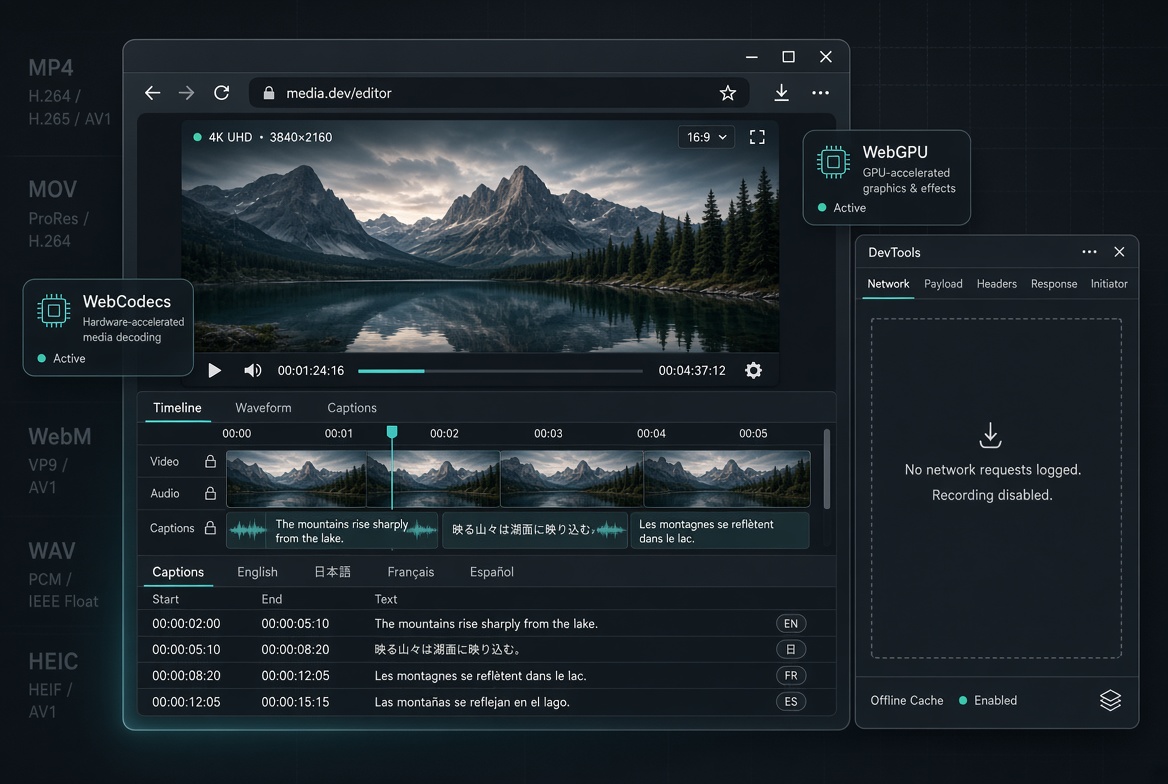
AetherCut, a browser-based video editor built by Robert J. Corn, runs the edit locally. The footage never uploads. The architecture is verifiable: open your browser's DevTools Network tab during an edit and the pane stays empty. No source-file transfer. No project sync. No transcript retention.
The tool ships 82 editing features and 35 AI tools, all running client-side or through privacy-respecting APIs. Timeline cuts, transitions, keyframes, and 4K H.264 export happen in-browser using WebCodecs and WebGPU. AI features like voice cleanup, eye contact correction, object erase, transcript-driven cuts, silence removal, and auto captions in 20 languages either run entirely on-device or send only the specific audio or frame slice needed for that operation. The full project file stays local.
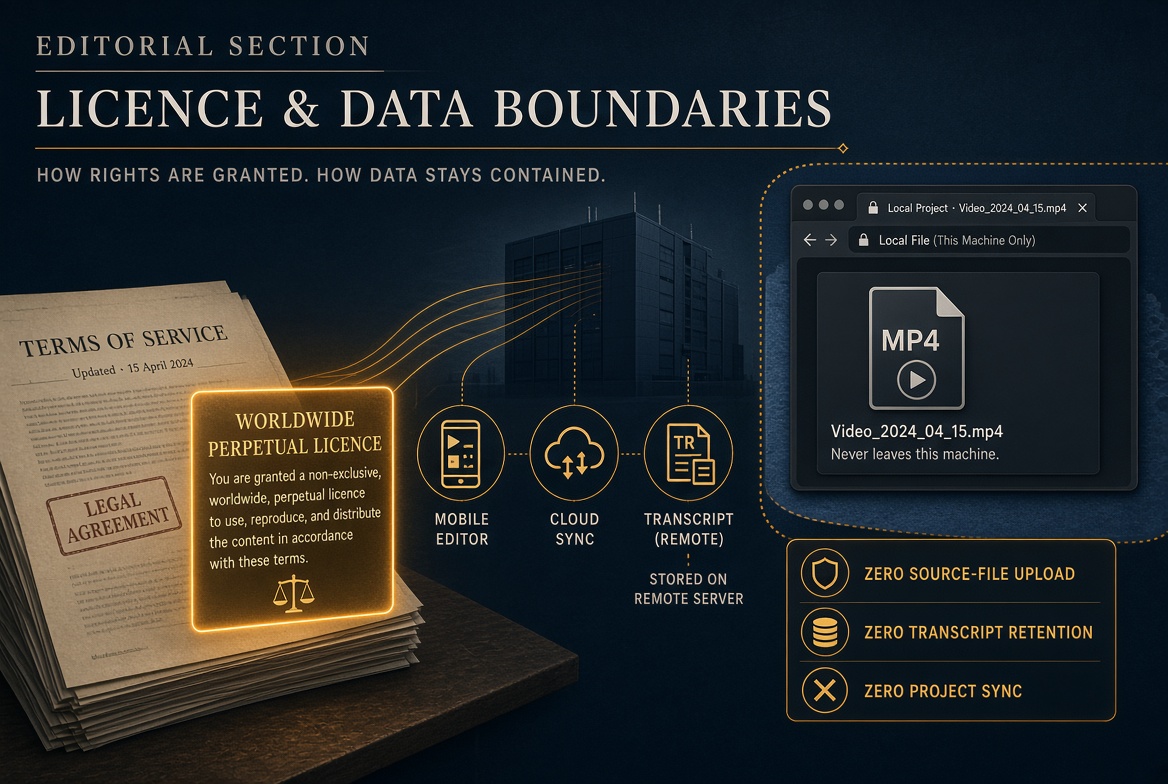
CapCut's parent company, Bytedance, grants itself a worldwide licence to uploaded footage under its terms of service. Adobe Creative Cloud syncs projects to its servers by default. Descript stores transcripts indefinitely. For a corporate marketing team, that might be an acceptable trade. For a researcher bound by an ethics protocol that specifies data handling, storage location, and destruction timelines, it is a compliance failure.
AetherCut was architected around three risks: zero source-file uploads, zero transcript retention, zero project sync. If a user deletes their browser data, the service has no record they existed. The privacy model is not a marketing claim. It is a technical constraint baked into the software's design.
WebCodecs and WebGPU are native browser APIs. Chrome, Firefox, Safari, and Edge all support hardware-accelerated video decode and encode. AetherCut uses those primitives to perform cuts, apply effects, and render exports without requiring a server round-trip or a multi-gigabyte desktop installation.
The editor supports MP4, MOV, WebM, and MKV video; WAV, MP3, AAC, and FLAC audio; HEIC, JPG, PNG, and WebP images. Exports run to MP4 at up to 4K resolution. The software installs as a progressive web app on iOS or as a trusted web activity on Android via Google Play, but installation is optional. It runs in any modern browser.
Load AetherCut once, cache the PWA, and it works offline indefinitely. No subscription required for the core feature set. The free tier includes 20 tools with full 4K export and no watermark. Founder Pro unlocks all 82 tools and 35 AI features at £14.95 per month for the first 100 subscribers, with a lifetime price lock.
Journalists handling source material under legal protection. Lawyers cutting deposition footage. Medical educators publishing case studies. HR training teams working with employee interviews. Solo creators who simply prefer not to upload their work to a platform that monetises their content.
AetherCut is not the only local video editor. DaVinci Resolve and Premiere Pro both edit locally. But neither runs in a browser, on a Chromebook, or on an Android phone. AetherCut does. The target is not professional colourists. It is the expanding middle: researchers, educators, and creators who need AI-assisted editing without surveillance.
The privacy claim is falsifiable. Open DevTools. Start an edit. Watch the Network tab. If bytes leave your machine, the architecture is broken. If they do not, it works as specified.