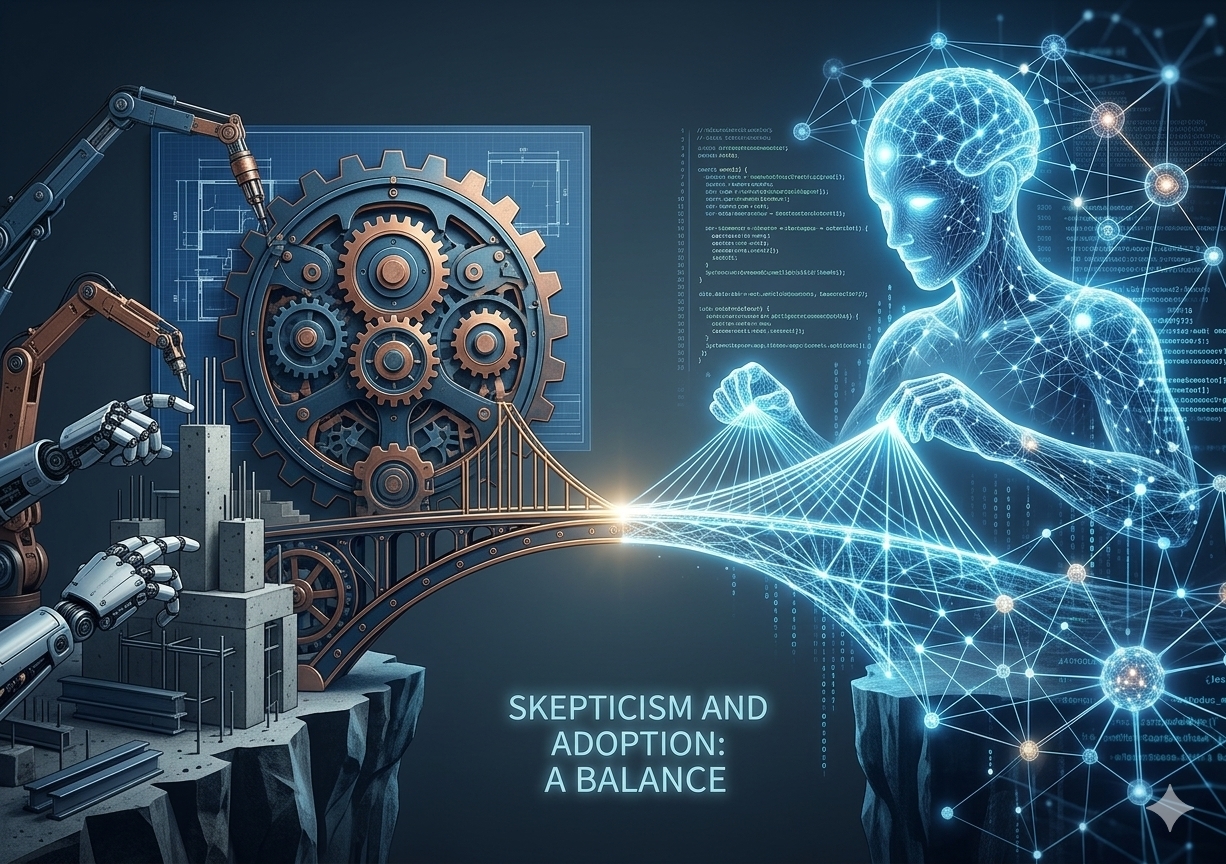
AI often gets labeled negatively because traditional builders value craft, proven methods, and direct control over outcomes. When a new tool appears to shortcut hard-earned expertise, skepticism is a natural response rather than simple resistance to change.
Many builders also associate AI with hype, low-quality output, or people claiming skills they have not fully developed. That perception can make AI feel like a threat to standards instead of a support for serious work.

Traditional builders often question whether AI-generated work can match the accuracy, judgment, and originality that experienced professionals bring. If AI outputs are used without review, they can introduce errors, generic thinking, or inconsistent results.
Trust is another major issue because clients and teams need confidence in how work is produced. When the process is unclear, AI can look like a black box instead of a reliable tool.

Many experienced builders spent years learning systems, solving edge cases, and refining judgment through real-world practice. When AI is presented as a replacement rather than an assistant, it can seem to dismiss the value of deep experience.
That tension grows when speed is celebrated more than understanding. Traditional builders are often reacting to messaging that treats expertise as optional, not to the technology itself.

The strongest approach is to use AI as a support layer for research, drafting, analysis, and repetitive tasks while keeping human oversight in place. This helps teams move faster without giving up judgment, accountability, or brand standards.
Responsible use also means setting clear workflows, reviewing outputs, and knowing where AI should not be trusted on its own. When teams apply AI with discipline, it becomes easier to earn buy-in from more traditional stakeholders.

The best way to reduce resistance is to frame AI around outcomes that matter to builders: efficiency, consistency, and more time for high-value work. Showing practical benefits earns more trust than broad promises about disruption.
It also helps to respect the builder mindset by acknowledging valid concerns and proving quality through process. Adoption improves when AI is introduced as a tool for professionals, not a shortcut around professionalism.